• Link to Facebook
  • Link to Instagram
  • Link to Yelp
  • Link to Pinterest
  • Link to Youtube
The Happy Beast
  • About
    • Our Philosophy
    • Caring for Cats
    • Our Pack
  • Products & Services
    • Products
    • Cat Cafe
    • Dog Training
    • Wild Nosh Pets
  • Events
  • Blog & Resources
    • The Beast Blog
    • Pet Resources Map
  • Contact
  • Shop Wild Nosh Pets
  • Click to open the search input field Click to open the search input field Search
  • Menu Menu
Kayson Cooper
Cat Health, Diet & Digestive Health, Dog Health, Safe Feeding

Digestive Enzymes for Pets
Digestive Enzymes for Pets | The Happy Beast

What are digestive enzymes? Enzymes are responsible for making the chemical reactions in our body faster and more efficient. Digestive enzymes aid the body by breaking down proteins from food into amino acids which can be absorbed and utilized. Enzymes facilitate proper absorption of foods.

Digestive enzymes are found in raw foods. They are what cause foods to break down and decay. For example, bananas contain the enzyme, amylase. Amylase breaks down raw starch into sugar, which is why green bananas become softer and sweeter as they sit on the counter. All raw foods contain the right amount of the specific enzyme required to break the proteins they are made of.

Why is this important? Cooking destroys the enzymes that are required to break food down, so when we eat cooked food our bodies have to source enzymes from an internal supply. If the body is focused on producing enzymes for digestion, less energy is allotted to the metabolic enzymes used in organ, muscle and cell function.

Efficient and complete digestion is essential to good health. When the digestive system is functioning well, the rest of the body is prepared to maintain good health and fight disease. Digestive enzymes can take the body from merely surviving to truly thriving. This is especially important in animals with allergies, compromised immune systems, IBD, IBS, and pancreatitis. Symptoms of an enzyme deficiency can include bloating, gas, irritability and fatigue.

How should this affect your choices for pet food?

  1. Feed raw. Any food that hasn’t been cooked over 118 degrees will retain its required enzymes. Choose a frozen, dehydrated and freeze-dried raw food that is complete and balanced. See some of the foods we recommend here.
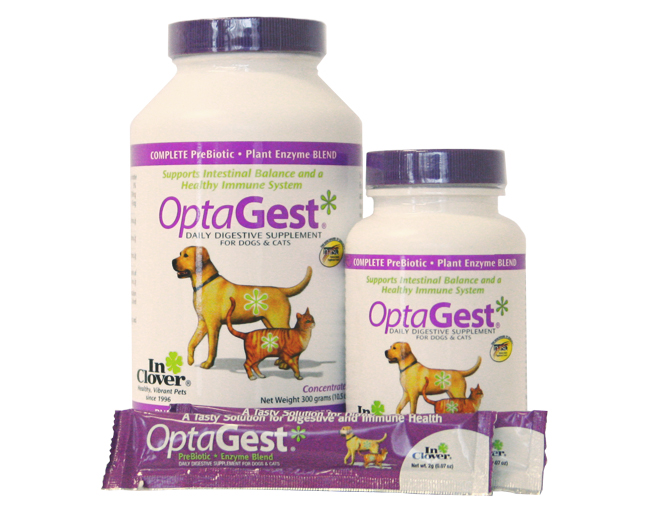
  2. Supplement with a digestive enzyme. Choose a plant-sourced enzyme as they survive under more diverse conditions. Avoid enzymes called “animal pancreas extracts” which may not survive the acidic environment on the digestive tract. We like InClover’s Optagest.
  3. Choose raw treats like frozen marrow bones and raw goat milk. These treats contain live enzymes to support the digestive tract and overall good health and your animals will love them!
  4. Read our blog post on “Helping Pets with Digestive Problems“ for more info and recommendations.

by Kayson Cooper
Tags: cat health, cats, diet, digestive health, dog diet, dog health, dogs
Share this entry
  • Share on Facebook
  • Share on X
  • Share on Pinterest
  • Share on Reddit
  • Share by Mail
https://thehappybeast.com/wp-content/uploads/2015/12/OG_button.jpg 505 655 Kayson Cooper https://thehappybeast.com/wp-content/uploads/2015/03/The-Happy-Beast-Logo-300x300.png Kayson Cooper2015-12-02 22:52:032025-02-16 07:07:20Digestive Enzymes for Pets
You might also like
Raw Green Tripe – Our Latest and Greatest Super Food!
The Scoop on Cat Litter
3 Super Simple New Year’s Resolutions for You and Your Dog
Warming Foods for Winter
Transitioning Your Dog to a New Diet | The Happy Beast Transitioning Your Dog to a New Diet
Kids, Cats & Dogs
Search Search

Categories

  • Adoptions
  • Animal Behavior
  • Cat Health
  • Dental Hygiene
  • Diet & Digestive Health
  • Dog Health
  • Exercise
  • Products We Love
  • Safe Feeding
  • Sustainability

Recent Posts

  • How to talk to your vet about raw pet food diets
  • The Vegetarian’s Pet Food Dilemma
  • Meat & The Environment: Beef
  • Discontinuing Single-Use Plastic Cat Food Pouches
  • Probiotics vs. Prebiotics for Dogs & Cats

Archives

CONTACT US

303.604.1300

eat@thehappybeast.com

HOURS
Mon – Fri: 10am – 7pm
Sat: 9am – 6pm
Sun: 10am – 5pm

© The Happy Beast

LOCATION

1230 Etna Dr.
Lafayette, CO 80026
(Get Directions)

Located just off South Boulder Rd. behind Elevations Credit Union and Stan’s Automotive. You can turn onto either Etna or Cimarron and look for the dark blue building.

BLOG POSTS

  • How to talk to your vet about raw pet food diets
  • The Vegetarian’s Pet Food Dilemma
  • Meat & The Environment: Beef
  • Discontinuing Single-Use Plastic Cat Food Pouches
  • Probiotics vs. Prebiotics for Dogs & Cats

Cat Cafe

Our new Cat Cafe is now open. Just $10 per person, up to 3 hours, and a free self-serve beverage. Stop on by and pet some cats!

Link to: Helping Pets with Digestive Problems Link to: Helping Pets with Digestive Problems Helping Pets with Digestive Problems Link to: Kibble Transition Guide for Picky Cats Link to: Kibble Transition Guide for Picky Cats Kibble Transition Guide for Picky Cats
Scroll to top Scroll to top Scroll to top