
Helping Pets with Digestive Problems
Many pets will likely suffer from one type of digestive problem or another in their lifetimes. The symptoms may be mild, including bad breath, excessive gas, a rumbling tummy; or more severe, including chronic diarrhea, constipation, vomiting, or mucus or blood in the stool.
The causes of digestive problems include food sensitivities and allergies, low-quality or species-inappropriate diets, overeating, stress, and ingestion of contaminated water or “found” foods (i.e. from the trash or picked up from the ground.) They can also be a side effect of another health condition, medication, or a result of parasites or bad bacteria in the digestive tract.
If your animal is suffering from chronic or acute digestive problems, including colitis, parasitic infection, irritable bowel syndrome (IBS), irritable bowel disease (IBD), or bacterial infection, be sure to consult with your vet. Often treating pets with digestive problems can be done through diet and inexpensive supplements.
Other things you can do to help pets with digestive problems:
- Feed more fresh, less processed, species-appropriate foods.
Highly-processed foods like conventional kibble (i.e. “dry food”) are harder for the body to digest. Replace some or all of your animal’s food with dehydrated, freeze-dried, or raw food. (We like Grandma Lucy’s, Sojo’s, Primal, Steve’s Real Food and SmallBatch.) Less-processed foods are more digestible and easier on the digestive tract.
- Eliminate foods commonly associated with food allergies or food sensitivities.
Choose foods that do not include “filler” ingredients like corn, wheat, soy, and animal by-products. Moving to higher-quality foods that don’t contain those ingredients often relieve many digestive issues. Some animals have reactions to other ingredients and will benefit from a limited-ingredient diet. Complete and balanced raw foods with simple ingredient profiles are ideal for experimenting with and eliminating potential food-allergens.
- Add prebiotics, probiotics, and digestive enzymes.
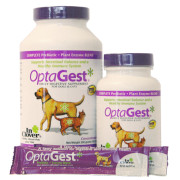
Digestion requires a lot of the body’s energy. (Think of how tired you feel after a big meal!) Adding enzymes found in fresh foods, raw goat’s milk, raw bones, and supplements (like InClover’s Optagest) can support the digestive system by helping to break down foods. Prebiotics and probiotics work in the intestine and improve efficient digestion. Read our blog post about “Digestive Enzymes for Pets” for more info.
- Control portions and meal times.
Many animals can also have upset stomachs from from overeating. (Again, think of how you feel when you eat too much!) Measure out how much food your animal gets at each meal and decrease those portions on days when your dog gets a bone or a lot of treats. Be cautious about feeding your animal too close to playtime/exercise, especially if you have a large-breed dog, in order to avoid bloat.
- Make a meat stock.
Adding a meat stock to your animal’s diet can help “seal” the gut. NOTE: Meat stock is different from a bone broth. Bone broth is cooked longer, resulting in high levels of glutamates. Bone broth has numerous health benefits for animals and people who have healthy intestines, but can worsen symptoms in a compromised digestive system.- Meat Stock
- Ingredients:
- 1 whole chicken or 2-3 lbs. chicken quarters or bone-in cuts, or
- 2-3 lbs. beef or lamb knuckles, marrow bones or ribs
- 2 tbsp apple cider vinegar
- Water
- Instructions:
- Place meats (still with the bone in) into a crockpot/slow-cooker with apple cider vinegar. Add enough water to cover meat.
- Cook on high for 1 hour, reduce heat to low, and simmer for 3 hours.
- Remove meat and strain broth through a colander or cheesecloth.
- Add ¼- 1 cup of broth to your animal’s meal or serve separately.
- The meat can also be deboned and consumed and the bones can be used to make a bone broth.
- Ingredients:
- Bone Broth
- Ingredients:
- The bones you just cooked!
- Water
- Instructions:
- Place bones back into a crockpot/slow-cooker. Add new/fresh water; enough to cover the bones.
- Cook on low temperature for 12-24 hours.
- NOTE: Bone broth should be reserved for animal and human members of the family not suffering from colitis, IBS or IBD.
- Ingredients:
- Meat Stock